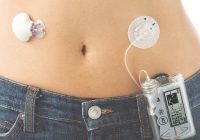
You are browsing the archive for pump.

by Tim

Pump update

8:00 am in Kit & equipment, The future by Tim

People who read this blog for a long time (you poor souls) may dimly recall that in September 2009 I wrote an article where I mentioned I would be getting a pump (it’s here, if you don’t remember it).

You may also dimly recall that I was a bit eggy about having to wait eighteen months (or 2.8% of my lifetime, I cleverly calculated at the time) to get the damned thing. I swore blue murder and mentioned that I would write to all concerned to remedy this crappy state of affairs.

Well, months passed, and I did indeed write to my MSP (health is a devolved matter and so is handled by the Scottish Parliament rather than Westminster) and the chief big cheese of my health board. I’m pleased to report that I achieved absolutely nothing and, in fact, I hear ugly rumours that since writing my original article the waiting list for pump therapy in the Lothians has now increased from 18 months to three years. Very not so good.

Anyway, time has now elapsed and I’ve been given an approximate start date for my lovely new pump – sometime in November. So that’s something to look forward to, an early Christmas present of sorts.

I’ve also been given a choice of pump. The decision of which pump to go for was, in the end, a pretty easy one as I was given a choice of *drum roll please* one. The Medtronic Veo or the Medtronic Veo. Fortunately I hear it’s not actually a bad pump and I suppose it does cut down on training costs – apparently the reason for the long waiting list. The probable fact that apparent difficulties relating to training is an excuse for rationing and limiting the supply of expensive pumps is, of course, neither here nor there.

As we all know, pumps aren’t a magic wand for good diabetes care. I’m not expecting it to magic my diabetical problems away in an instant (and anyone that does is somewhat deranged). However, I do think pumps are a more subtle and versatile tool for trying to manually replicate what your pancreas does automatically (well, it would if it worked!) which is, after all, what we diabetics are trying to do day in day out.

So there we have it – the end of the pump saga is gradually hoving into sight. No doubt I’ll keep you all updated with further developments as and when they eventually happen.

by Tim

Back to MDI from a pump

11:00 am in Kit & equipment by Tim

Mark Mansheim – friend of your soaraway Shoot Up and frequent contributor – has written an article over on his blog about his experience of reverting back from a pump to MDI. He covers off the pros and cons of each and gives an interesting view of the benefits of pumps. Well worth a read!

See: The Jagged Edge

by Alison

What made the difference?

8:00 am in Living with diabetes by Alison

My HbA1c results show that my pump and CGM are working for me. But they’re not a cure so what is it about using those tools that’s made the difference?

Metronic Paradigm pump & CGM

Doing the research

I read Pumping Insulin: Everything you need for success on a smart insulin pump by John Walsh.  It’s a weighty tome, but it helped me work out how to get the best out of my pump.

Beyond that, I think there are 6 main areas where I’ve seen major improvements:

1. Overnight levels.

Before – nights were a bit of a blood sugar rollercoaster ride of drops at 3am and rises at 5am. This meant I had to go to bed higher than I wanted to avoid hypos and I’d wake up higher than I’d have liked.

After – I can now go to bed at a 5 and wake up at a 5. I have the basal rate on my pump set to decrease at 1.30am, to ward off the 3am low and then increase at 3.30am to stop the 5am high. Looking at the CGM graphs of my overnight blood sugars helps me adjust the basal rates.

The CGM also showed that as soon as I get out of bed in a morning my blood sugar rises, even if I have no food. Now I take 0.5 units as soon as I get up to counter this.

2. Post meal peaks.

Before – I injected when the food was on the table and I could see what I was going to eat. Or sometimes I’d inject afterwards if I wasn’t sure how much I’d eat. If I was being good, I’d do an injection before a meal and then another after, but that wasn’t something I did often.

After – I conservatively guestimate how many carbs I’m going to eat and bolus for that about 30 mins before I eat, more if CGM shows I’m high. It’s no hassle, I just press a button. Then, when the food arrives I’ll put more insulin in if required. Dessert? Press the button again.

The CGM helped me see the impact of not injecting in advance of meals. I’d always known the theory, but nothing brings it home like an upwardly rocketing CGM graph. And nothing is more satisfying than seeing a gentle rise and fall after a meal, rather than a massive peak on a graph.

And then there’s the bolus wizard on the pump – I always thought I had no need for a glorified insulin calculator but I was wrong, when you get it set up right its much better at working out how much insulin I need than my finger in the air guestimates.

3. Dealing with certain foods 

Before – pizza was a nightmare, if I injected for pizza as I ate it I’d be hypo in a couple of hours and then high for about 12 hours after that.

After – I use a dual wave bolus on my pump when I eat pizza. I set it to deliver some insulin as I eat, but then spread the rest of the insulin over the next 5 hours. The CGM lets me track whether I’ve got it right, and take more insulin early if I see I’m rising. Same goes for plenty of other foods too. 

4. Less time spent flying high

Before – I’d only know if I was high when I did a blood test. If I was having a life and didn’t test for a whole afternoon, that would mean I’d be high for 5 hours and not know.

After – I have the CGM set to alarm if I go above 9.5. Plus,  if I look at the CGM and see that I’m rising fast I take more insulin to try and head it off early. That means when I mess up with carb counting or hormones kick in or whatever other reason means I end up high, I spot it early and take action quickly so I don’t rise as high or stay there for as long.

5. The little things

Before – a biscuit during a meeting or a couple of sweets stolen from a friend weren’t worth an injection.

After – I bolus for pretty much everything (assuming I’m not low of course). I’ll take 0.5 units for a small biscuit or a couple of sweets, it’s only the push of a button and it keeps my levels pretty flat.

6. Correcting highs

Before – If I was a 7 I couldn’t really do anything about it – I didn’t need a full unit of insulin so I was stuck with it.

After – Now, if I’m 7 I’ll take 0.3 of a unit to bring it down to around 5.5. A quick glance at the CGM lets me see where I am and whether I’m rising or falling. It puts the number in context – on it’s own a reading of 4 means I need to eat. With the CGM, a reading of 4 that’s been like that for several hours while I’m watching telly and have no plans to move needs no action at all.

So, the pump and CGM haven’t given me the magic bullet to diabetes control, but they’ve let me tweak my control is several key areas that all add up to better overall results. And better quality of life. It took a lot of research and effort to get to this point, but it works for me and importantly, it’s sustainable. I can manage my diabetes like this long term and have a life.

by Alison

Kangaroos and armadillos – a story of HbA1cs

8:00 am in Living with diabetes by Alison

Beware, what follows has somehow turned into a slightly bizarre piece using animals to illustrate HbA1c result variations. I don’t know where in my mind this came from but bear with me, the real point is that my pump and CGM have made a real difference to my long term diabetes control.

A year ago I graphed my HbA1c results for the first timeand was pleasantly surprised (read absolutely gobsmacked and delighted) with the results my pump and CGM had helped me to achieve.

Pre-pump the graph looks like the results of an Alison vs kangaroo wrestling match. If I tried really hard I could tie that kangaroo down and get my HbA1c around 6.5. Once, I managed a particularly brilliant left hook and floored it to 6.2. Sadly, as kangaroos and HbA1cs are apt to do, the damn thing always bounced back up to around 7 whenever I took my eye off the metaphorical kangaroo.

Then I got the pump and CGM and the graph looks like I taught the kangaroo to ski (yes, I am starting to regret this bouncing kangaroo analogy but its too late now). The downhill ski slope 4 months after starting on the pump was the last significant gradient. From then on the kangaroo lost it’s bounce and became more of an armadillo, wandering gently through the meandering flatlands that made up the next 2 years. My HbA1c flatlined, the slight twitch as it varied between 5.5 and 5.8 the only real sign of life in the graph.

Recent forum debates about whether anyone had graphed the impact of pumps on HbA1c prompted me to carry out my first annual graph update. The result leaves me feeling a bit like Mary – just a little contrary.

I’m delighted to see that there’s been no change; I’ve flatlined for another year with HbA1cs between 5.6 and 5.8 and no significant hypo issues. If I didn’t know better I’d swear I must be dead, such HbA1c consistency is not something I’ve been used to over the last 27 years of diabetes. I still have bad days, random blood sugars, hypos, times when I forget to bolus and times when I’ve had enough of the whole thing, but they’re much rarer now. I’ve found the tool that lets me manage my diabetes as I want to and the kangaroo, if not quite dead, is certainly enjoying a long hibernation period.

So why do I feel so contrary? It leaves me with little more to say on the subject than I said a year ago. What use is that when I’ve got a blog to populate?

Let the battle commence! ARGH!

9:16 pm in Kit & equipment, Living with diabetes by Samantha

Just out of reach :(

By Samantha

Today, I go into battle. Excuse me while I suit up…and the somewhat serious nature of this post…

Since deciding that an Insulin Pump would be the best option for me, I seem to have had nothing but trouble from various people in the diabetes specialist world. As some you may know from reading my own blog, I have recently come out of a few years of huge diabetes rebellion which has culminated in the onset of peripheral nueropathy. Not very nice I can tell you. And since getting my backside into gear, my blood sugar levels have been all over the place. We’re talking constant hypos (three or four a day usually), which I don’t often feel, as well as huge highs. And all of this is despite carb counting.

I have been arguing with specialists for months now about getting a pump. And my fantastic nursing team have been brilliant about it, pushing my notes forward to various professors and big cheeses.

Then the phone call this morning came. It was my nurse, and she told me that the big cheese had said under no circumstance would I be eligable for a pump. He reckons my latest HbA1C is too good, and I’m too well controlled. Funny that…despite phoning up my nurses in a panic because of various factors and them knowing the factors that have contributed to my wanting a pump. Funny, that despite having massive blood sugar issues, and massive problems with the restrictions of MDI’s, that they still feel it necessary to refuse this flat out.

HbA1C is not the be all and end all of starting on insulin pump therapy surely? Surely there are other factors involved such as the way the diabetes affects the person in question’s lifestyle? Such as, oh I don’t know? Deblitating hypos? It just seems funny that a supposedly brilliant team has immediately jumped on the HbA1C thing, rather than considering all the options.

A total kick in the teeth. And one I’m not going to give up easily I can tell you. Someone fetch me a giant stick so I can keep hitting my specialist with it til he relents!

My fight starts now. It’s going to be a long and hard battle, and many lives may be lost along the way. But I’m certainly not going to give up on this one. The emails to various people in the know have been started, and a full on daily diary of blood sugar issues and whatnot has been started too. My weapon of choice? One fully loaded novopen 4…kapow! Take that specialist team!

But my question for you guys is thus: have any of you had to put up with such things getting hold of a pump? And also, do you have any advice?

—————

Samantha is Type One and regularly blogs at http://www.talkingbloodglucose.com/

by Alison

Push the button

10:32 am in Kit & equipment, Living with diabetes by Alison

I pushed the button and nothing happened. I pushed it again and it worked. At least when my pancreas broke it went completely kaput. After almost 3 years of uninterrupted service my battery powered pancreas was having a bit of a wobble, but was it serious enough to call for help?

I’m not really the type of person who calls a helpline at the drop of a hat. If something breaks at home I try and fix it. If my laptop is playing up at work, I’ll consult family, friends, strangers, the neighbour’s dog. If all that fails I will reluctantly go through the process of making a cup of tea and mentally preparing myself for the trauma of calling the IT helpdesk. I’m happiest when I’m self sufficient.

The other day I pressed a button on my pump and it didn’t respond. I pressed it again and it worked. That happened a couple of times throughout the day and I started to wonder whether I should do something about it. It’s hard. If my pancreas worked and one day I felt a slight twinge in it I wouldn’t go running to the Dr’s. I’d wait a couple of days, see if it got any worse or whether it’d get better by itself. With my battery powered pancreas though I’m a bit twitchier.

I felt like a neurotic over-protective obsessive when I called the helpdesk and heard myself explain that one button on my pump sometimes didn’t work first time but generally worked second time. The lady on the other end obviously deals with such people a lot as she didn’t laugh at me, said it sounded like the start of a button failure and I’d have a new pump on my doorstep the next day. Good job Medtronic, great service.

I wasn’t being neurotic, just pro-active. So now I’m wondering if I’ve been too lax over the years. Perhaps I’ve not been diligent enough with my electronic devices and I need to up my game. The vacuum cleaner made a strange noise last week when I turned it on; I should probably call the help desk about that and let them know. The fridge door squeaks too; I might give the manufacturer a call. And when I turn the TV on it occasionally flickers; I should report that to someone. I could become a professional pesterer.

I must stop there. I’ve no time to blog any more; I’ve got help desks to call.

by Alison

I'm sorry

8:00 am in Living with diabetes by Alison

SorryI’m lucky in that I get to talk to quite a few pancreatically challenged people, both in the real world and online. I like to hear their views. There are a few things I seem to disagree with a few people on though and I’m sorry, but they’re things I’m not willing to apologise for.

  • I can’t get excited about a cure. Many people believe I should have my insulin withheld for a week to torture me for this abhorrent view. I’ve had diabetes since I was 4. If I’d have spent all that time wishing and waiting for a cure I’d have had a pretty dull life. It’s a great marketing ploy – it’s so much easier to raise funds for research into a cure rather than research into a project to examine the best ways of helping teenagers live with their diabetes. But ultimately, it’s not something I waste much time thinking about.
  • I will not feel guilty about costing the NHS money. I pay my taxes, I did nothing to bring this on myself. I don’t look at people with asthma, eplilespy, multiple sclerosis or cystic fibrosis and think “they’re not worth the money it costs to keep them alive” so why should I think it about myself.
  • I will not apologise for having an“expensive” pump and CGMS. The amount of times I get told – by a mixture of healthcare professionals and the pancreatically challenged  “pumps are very expensive”, “they’re not suitable for everyone”, “you’re very lucky to have one” is to be frank, a little tiring. Let me take those one by one.
  • “Pumps are very expensive” – compared to what? Compared to a packet of biscuits they cost a fortune. In comparison to kidney dialysis they’re an absolute bargain. Compared to the cost of providing a blind amputee with the support they need to live, they’re a drop in the ocean.
  • “They’re not suitable for everyone” – I agree. At which point did I suggest that the world and his wife needed a pump? I did the research and decided it was the right route for me, that’s not the same as forcing the entire country onto insulin pumps. Research by John Pickup* says about 20-25% of people on insulin would benefit from a pump, so no one is suggesting they’re for everyone. I am keen though that everyone who’s done the research, assessed the options and decided that a pump would be good for them is given the chance to use one.
  • “You’re very lucky to have one” – yes, I am. And if I’d made no effort to educate myself about how to use it, or I’d got it and left it on a shelf gathering dust I should whip myself daily with a paralysed porcupine as a punishment for wasting valuable resources. As it is, I’m using it to give me good diabetes control and great quality of life. What more do you want?

So, there’s my list of things I’m really not willing to apologise for. Sorry

* Pickup JC. Are insulin pumps underutilised in type 1 diabetes? Yes. Diabetes Care 2006; 29: 1449-52

by Alison

About to start pumping?

8:00 am in Kit & equipment, Living with diabetes by Alison

Insulin pumpI have a few friends starting on pumps soon so having previously discussed getting funding for a pump, choosing a pump and answering the top questions people ask about pumps, I thought a few top tips on starting pumping might be helpful.

Firstly, don’t underestimate it; starting a pump is a big change.

Research, research, research. My bible was Pumping Insulin by John Walsh. It’s quite technical but it tells you everything you could need to know about using an insulin pump. I read it before I started pumping, used it to work out what my insulin dosages should be and then re-read it once I’d started on the pump. I’d have been lost without it.

Some of the pump companies do good online training which you can do before you start on the pump. Whatever you do, make sure you do some reading before you start, that way you’ll hit the ground running and it won’t all be quite so alien to you.

Think about taking someone with you to your pump training. I took the husband and it made it so much easier. There is a lot to remember, and it makes such a difference to have someone else who’s been through the training when you’ve forgotten how to change an infusion set!

Don’t panic! You didn’t learn all about diabetes on the day you were diagnosed and the same goes for getting your pump. Understand the basics first, then have a play with the more advanced settings.

Test, test, test – it’s the only way you’re going to work out your insulin rates. If you can get your hands on a CGMS, if only for a few days, I think they make a real difference in helping you to work out what’s working and what isn’t.

Don’t be disheartened. It took me about 3 months to get to the point where I was as comfortable with my pump as I was beforehand. I loved it from day 1, it just took time to work it all out.

Don’t be surprised if you wake up in a cold sweat because you think you’ve forgotten to take your Lantus, then realise that you don’t need it any more. That took a while for me to get used to.

Always carry a spare syringe with you. The proper advice is that you should always carry a spare infusion set in case you rip it out, it blocks etc. Because I’m a bad diabetic who hates carrying junk, I don’t do this if I’m just out for the day. If you’re stubbornly stupid like me, at least carry a syringe with you – that way you’re not completely scuppered when you have one of those days.

Fellow pumpers, do you have any other top tips for those about to enter the world of pumps for the first time?

by Tim

Pump training

8:00 am in Kit & equipment by Tim

A needling problem

A needling problem

Avid readers of your soaraway Shoot Up will know that I’m currently on an 18-month long NHS waiting list for a pump. You’ll also recall I’m not too chuffed about this for obvious reasons. As, on the whole, I’m generally a pain in the arse I’ve been writing polite letters to everyone concerned about this sorry state of affairs.

I’ve generally had sympathetic replies from my MSP, the chief pump honcho at the hospital and the Chief Executive of the health board wrote to me the other day to say he’s asked someone to investigate and report to him about pump provisioning. It does seem that people are generally supportive, which is nice to know but – of course – not actually of any practical help to diabetics.

Certainly in my area the main sticking point appears to be the lack of funding – not, as you might expect, for the pumps and supplies themselves but for the training required for new pump users. I do agree that pumps are slightly more complicated than administering MDI, as there seems to be a greater possibility of complete cock-up with a pump compared to MDI. Though, as we all know, it’s very easy to utterly mess up with MDI – I do it quite often!

My health board undoubtedly has some great DSNs and the training I received when I was first diagnosed was relatively brief but was of a very high standard. But, unfortunately, there just doesn’t seem to be enough of them to go around. Currently their policy is to train about 5 or 6 new pump users every two months. This just isn’t enough throughput to increase Scotland’s woefully low number of pump users up to levels that are on a par with the rest of the country, let alone the rest of the western world.

If training genuinely is a bottleneck (and not just a slightly cunning feint to avoid funding new pumps without breaking the rules) then there seems to me to be a possible solution in the form of a public-private initiative in which everyone could win.

So here it is – what about the NHS partnering with the pump manufactures to provide training? The pump manufacturers will, obviously, know exactly how their pumps work, how they’re best used and will have a wealth of experience in supporting their customers in using their products. Everyone knows that diabetes is a nice earner for our favourite pharmaceutical companies and so the cost of training could be recouped on a cost-recovery basis or even as loss-leader set against the ongoing purchase of pumps and supplies.

Pump manufactures would surely have a reasonable amount of available resource to chuck at training (especially if it benefited them through long term and ongoing sales) and such an arrangement would free up NHS staff to do what they do best – supporting diabetics.

But might this lead to reduced patient choice? If, for example, Small Manufacturer A wasn’t able to supply training while Large Manufacturer B did, then might there be an inherent bias in the NHS to encourage diabetics to get a pump from Large Manufacturer B as they could then save on training costs?

I don’t think so, as any such arrangement would necessarily reduce the training overhead for the NHS allowing them to concentrate their resources on supporting patients who wanted, for whatever reason, to use a pump from Small Manufacturer A.

In this scenario everyone wins – patients get training and pumps quickly; the NHS’s training costs are reduced; the pump manufacturers get a loyal and going supply of lucrative diabetics.

But what about the issue of the bifurcation of training? After all, training from a pump company might not be at the same standard as NHS training? (Of course, it might be better). But given that standards of training and pump provision vary wildly around the UK, I can’t see that this would make any significant difference from the current position.

by Tim

I'm getting a pump. Eventually.

8:00 am in Kit & equipment, Living with diabetes, The future by Tim

Stock image of insulin, tenuously used to illustrate article

Despite my championing multiple daily injections in a previous article, I have to finally come out and confess that I’m getting a pump. Eventually.

Back in the heady days of July, I popped along to my diabetes clinic and spoke to the specialist diabetes nurse about pumps. We discussed my diabetes and the problems that I have with it – the main problem being my BG range is huge – first really high, then really low.

We then had a chat about pumps in general and discussed the research I had done and how I thought one could help me to level out my BG, so that the graph of my results could resemble something less like a profile of the Himalayas. We also had a fiddle around with a pump and got very geeky about how they could be configured and programmed to precisely match my insulin needs. After an hour or so of jolly chat we both reached the considered conclusion that pumps were very definitely the Way Forward.

A month later and I received confirmation that lo! I had indeed been placed on the waiting list for funding and training. The email also casually mentioned said waiting list was eighteen months. Grr.

I would, in other words, have to wait until 2011 to get my pump. By then I would have reached the ripe old age of 34 and would be 2.8% of my lifetime closer to the cold, unforgiving grave (assuming I get my full three score years and ten). I was not, and indeed am still not, pleased.

As I have a legal background in contentious stuff (to use a technical term there) and having been educated in the “Alison Finney School of Badgering Primary Care Trusts” I have decided not to stand for this. This is not because I want to skip the queue to get a pump ahead of everyone else – I want anyone who needs a pump to get one quickly. Healthcare provision is partly about serving the patient’s needs and unless patients let their healthcare providers know what their needs and expectations are nothing will ever change.

Realistically I’m not expecting the NHS to hand pumps out like sweeties (sweeties and diabetes never mix, after all) but it’s not unreasonable for diabetics to get the healthcare support and resources that they need. Especially when an increasing number of studies have shown that provision of pumps and good healthcare lead to fewer complications, which in turn leads to lower healthcare costs in the future. In other words, spend a bit more money now and save a hell of a lot later.

As I mentioned in my article about pumps being debated in the Scottish Parliament, Scotland seriously lags behind the rest of the western world in pump provision. Out of population of five million, only 416 people in Scotland have pumps for goodness sake! Scotland and the UK really do need to be dragged into the 21st century in relation to diabetes care.

So what have I done so far? As a starter for ten, I’ve corresponded with the various groups that support pump users including iPAG Scotland, the tireless Lesley at INPUT and Diabetes UK Scotland. In addition, I’ve written to my Member of the Scottish Parliament (health is a devolved matter – so Scotland deals with it, rather than Westminster) and asked for his support, which he’s confirmed he will give. I’ve also bashed off a note to the doctor who heads up the pump provision at my hospital to ask for his comments.

So, dear readers, the saga continues and I’ll keep you up to date with the thrills and spills of pump provision within the NHS as it happens. As always your comments and experiences are always very, very welcome here and on the forums.

http://www.shootuporputup.co.uk/2009/09/08/scottish-parliament-debates-insulin-pumps/