You are browsing the archive for lantus.

by Tim

Why are insulin pens so ugly?

8:00 am in Living with diabetes by Tim

Urgh. Ugly

Urgh. Ugly

One of the many wonderful features of diabetes is the sheer, damned boredom of it all. Diabetes is generally about the day to day uneventful plod of checking our blood glucose and balancing carbohydrate and insulin intake. While there are sometimes the exciting peaks and troughs of extreme hypoglycemia and hyperglycemia – which do, admittedly, add a certain frisson of excitement to the daily toil – generally not much of any interest happens.

The one glimmer of interest that appears briefly through the fog of general boredom is the gadgets. In my limited experience, it’s common among diabetics, especially of those within a certain demographic (I’m essentially talking men in their 20-30s here), to have an ongoing obsession in the latest shiny stuff marketed to the pancreatically-challenged hoards by our favourite friendly pharmaceutical conglomerates.

A great example of this is the hype concerning the new Bayer Contour USB glucose meter within the blogosphere (I really hate that word – it creates an air of an important, unified community of useful social commentators; which, of course, we all know doesn’t actually exist; most blogs – especially this one – are made up of an ill-informed, soupy conglomeration of poorly written rants and miss-enlightened opinions that no sane person cares about. But I digress).

Anyway, lots of people have been burbling on about how they’re looking forward to Bayer’s new funky colour screened wondrousness arriving on the market for our joyous consumption. All this goes to prove my point – us diabetics love our gadgets and shiny things.

So, with this in mind, why are the insulin pens us pump-challenged people depend on so damned ugly?

For example, I was idly examining my lantus-enabled AutoPen 24 earlier today and noted its vile, tacky cheap plastic feel. It really is a horrible pen – like something you would win in a disappointing set of Christmas crackers. Similarly, my Lilly HumaPen “Luxura” which I use on a daily basis to squirt humalog into my stomach is hardly as luxurious as the name implies. If, to use an tenuous analogy here, luxury is defined as the Presidential Suite of the five star Balmoral hotel in the heart of Edinburgh then the so-called “Luxura” pen is a threadbare, slightly sticky carpeted, one star Travel Tavern situated near a busy junction on the Norwich bypass. Not so good.

Over the next ten years I’ll stick in just under 15,000 injections (unless I finally get my pump, but that’s another story). So please, beloved pharmaceutical companies, please can you come up with a pen which looks great, works well and helps to stave away the horrendous boredom of diabetes!

by Alison

I think I might be an insulin tart

8:00 am in Kit & equipment, Living with diabetes by Alison

I’ve been reviewing my insulin history over the last 26 years and it appears that while I’m able to sustain a reasonably long relationship with an insulin brand, I have been a bit of an insulin tart over the years swapping to the latest thing when it’s caught my eye.

When I was diagnosed, back in the dark ages, Eli Lilly were the big thing in insulin. They’d just brought out this new stuff called human insulin. In Lilly logothe dark ages most people used animal insulin, produced by boiling up dead cows and pigs, running the resultant broth through an insulin extraction machine then bottling it. (Here, I must admit that the finer details of this description may be a little inaccurate and I acknowledge the process was probably a little more refined than this, likely using microscopes and stuff.)

Anyway, human insulin was the next big thing and my consultant was very excited that Lilly’s Soluble and Isophane human insulins were on his prescription pad. At the time they seemed fine, they kept me alive which was better than my own body could manage so they were a good thing. Looking back, they were pretty crude. The long acting liked to peak and fall like a rollercoaster and the short acting needed to be injected six weeks in advance of you thinking about eating.

Novo Nordisk logoIt was the best we could find though, so we stuck with it. My promiscuity started early when aged 9 I jumped ship and moved to NovoNordisk. They’d brought out a marvellous new invention – the NovoPen. Instead of using a syringe twice a day, you could now use a super sexy metal pen to inject with four times a day – it came with Actrapid, a faster, shorter acting insulin you injected just 2 weeks before your anticipated meal. This was intergalactic type progress!

Actrapid’s long acting partner was Ultratard, still with plenty of ups and downs but it also had the additional quirk of only lasting about 18 hours when you actually needed it for 24. Nice.

About 10 years ago the world really changed. A new thing called insulin glargine arrived. And being the insulin tart that I am, I went for it. Sanofi-Aventis became my new best friends with their 24 hour lasting, flat as a pancake Lantus. Marvellous stuff, so much better than that nasty Ultratard although personally the no peaks/no dips thing didn’t really work for me, I found it liked to rocket about 6 hours after I’d injected it, but perhaps that was just me.

Sanofi-AventisThe best thing was still to come though. A properly fast acting insulin. Despite my long term relationships with other drug companies, it seems I still held a torch for my first love, Lilly. That smouldering torch was ignited again when they brought out Humalog. You could inject and then eat pretty much straight away (well 20-30 mins but who’s counting?). And it didn’t last for hours on end causing hypos 5 hours after meals like some of it’s predecessors.

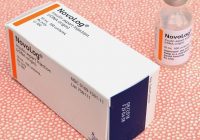
I’ve used Humalog for at least 6 years now and we get on just fine. But am I being complacent in this relationship, have I just got all comfy with Humalog and taken myself off the insulin dating scene because we’re lazily snuggled up on the sofa together? There’s plenty more fish in the sea, should I be setting up a date with the slightly newer Apidra or NovoRapid/Novolog? They claim to work a little bit faster and possibly for a shorter duration, but is it enough to be worth the hassle of getting to know a new insulin?

At the moment I think I’m settled in front of the fire in my slippers with my Humalog, not because it’s earth-shatteringly fabulous, but because it’s doing what I need it to do.

Are there any Apridra/NovoRapid/Novolog lovers out there who can convince me it’s worth getting back on the dating scene?

by Tim

Fun causes cancer

8:00 am in Living with diabetes by Tim

Concentrated cancer in a tube?

Concentrated cancer in a tube?

The major story that’s doing the diabetes news circuit at the minute is the cheerful report that suggests that everyone’s favourite long-acting insulin lantus can cause cancer. Thrill seekers can check out Google news if you want the very latest.

Being an avid lantus user (40 units a day at 7.30pm fact fans!) I had a look into these claims – after all I don’t have an overwhelming urge to be sent to an early grave by cancer. I’d much rather diabetes complications did that instead.

So I had a look through the various news reports available online. Interestingly enough – and just as an aside – most of the reports referred to two other studies which compared and I quote “similar databases in Scotland and the UK”. Since 1707 Scotland has been part of the UK, so this sentence is complete nonsense. But why do I bring this up? Friends and family do tell me I delight in being an annoying pedant and while this is certainly true this is not the reason. This rather obvious slip-up appeared in virtually all the published reports – demonstrating that lazy hacks had done a cut-and-paste from one article to the next.

While this is hardly unusual, it does demonstrate the complete lack of objective research or indeed any sort of considered thought that has gone into these news stories before publication.

Anyway, that aside, it appears from our somewhat shaky reporting that of four recent studies into long-term lantus use, one has shown a slight increase in risk of certain cancers among users. The other three haven’t. This, however, was enough to get the American Food and Drug Administration (FDA) interested; they concluded that:

The duration of patient follow-up in all four studies was shorter than what is generally considered necessary to evaluate for cancer risk from drug exposure… Further, inconsistencies in findings within and across individual studies raise concerns as to whether an association between the use of insulin glargine [i.e. lantus] and cancer truly exists. Additionally, differences in patient characteristics across the treatment groups may have contributed to a finding of increased cancer risk.

In other words, the tests were too small and too short to show anything of any meaningful significance. Despite the FDA saying this, not one of the newspaper reports considered how the studies were carried out, on whom, by whom, with how many people, whether the final reports were peer reviewed and whether there had been a significant meta-review of the topic. When you stop and think it’s astonishingly easy to pick holes in the entire thing.

So if it was so insignificant, why was this such a big splash? As we all know, the press love cancer scares and love reporting them badly and lazily. A non-specialist reporter with a looming deadline and column inches to fill is never going to give medical reports the time and in-depth consideration they need to be accurate.

So as a result we get ill-considered headlines “X causes cancer” (replace X with something you like or enjoy – red wine, chocolate, cycling, whatever). In fact we could just replace all these headlines with a generic title “Fun causes cancer”. In fact they already have.